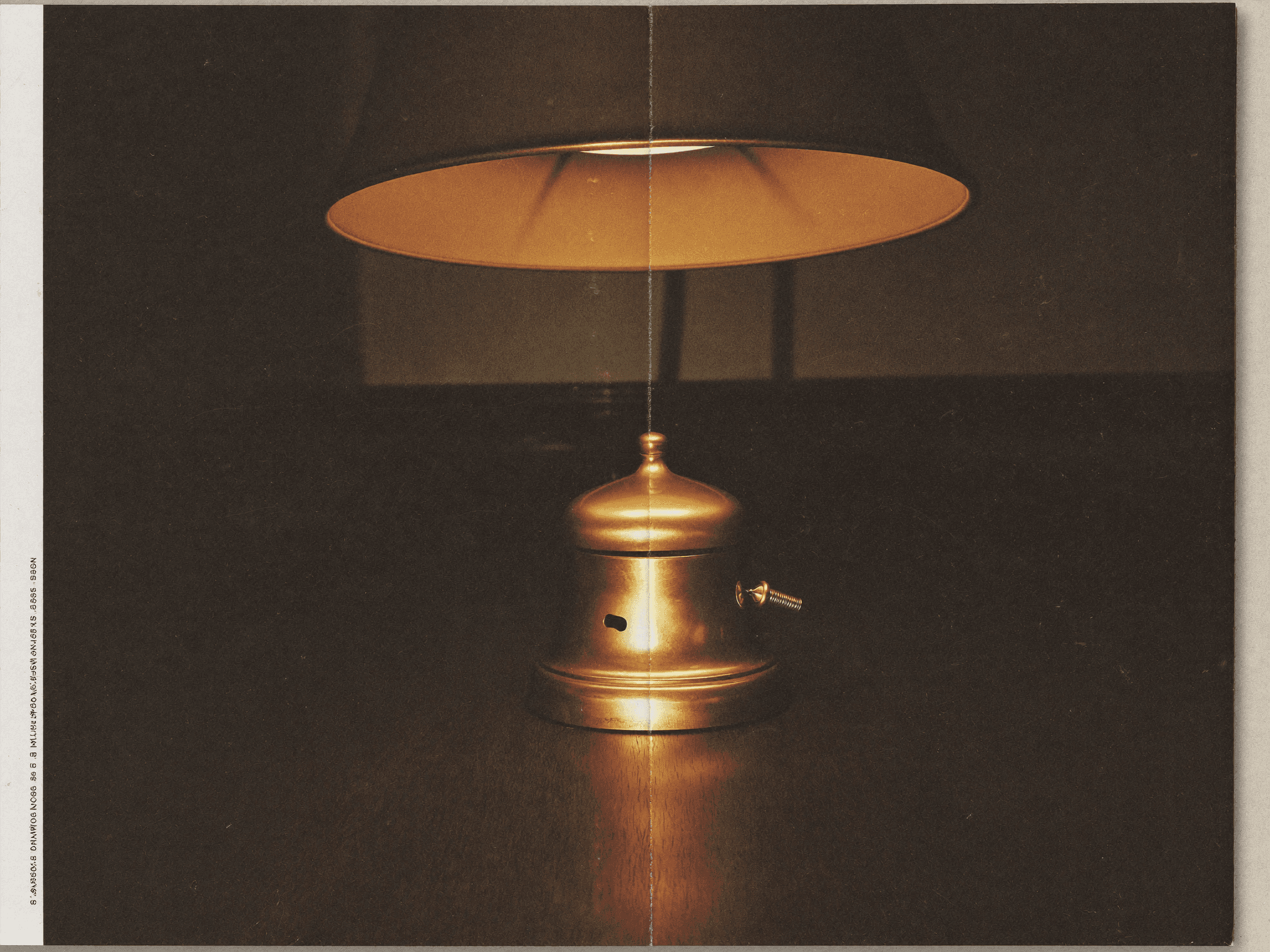

The tool generates options. Direction decides what survives.
The tool trap
Treating AI as a faster Photoshop misses what actually changed. A tool waits for instructions. What we have now can hold context: your positioning, your palette, your last forty shipped assets, and every rule about what your brand refuses to look like. That isn’t a tool profile. That’s a job description.
Studios that only use AI to render other people’s taste faster end up producing the same thing as everyone else, sooner. Speed without direction just gets you to generic first.
What direction actually is
Creative direction was never about making things. It’s about holding a coherent point of view across hundreds of small decisions: this reference, not that one; this much restraint, not that much polish. It is mostly the word no, applied consistently.
Most of those decisions are pattern-matching against a worldview. And worldviews, it turns out, can be encoded — not perfectly, but far better than a brand PDF ever managed.
The taste veto
Here’s the boundary we hold: AI can propose, sort, mimic and extend. It cannot yet want anything. It doesn’t know that a candle brand should feel like whiskey and old paper before the wick is ever lit, or that removing an element is usually stronger than adding one.
So the human role sharpens rather than shrinks. Someone still sets the worldview, feeds it, corrects it, and vetoes it. Taste stops being spread thin across a hundred production decisions and concentrates into the few that define everything downstream.
What this looks like in practice
In our builds, the direction layer lives inside the system itself: references, rules, tone, negative space, and the specific ways a brand fails when it drifts. Generation happens inside those walls. Review happens at the walls — not inside every individual asset.
The result isn’t automated creativity. It’s supervised conviction, and clients feel the difference, because everything that ships sounds like one author.